









Hawthorn has long held an important place in traditional and folk medicine, being valued for its healing properties, its rich nutritional profile, and its remarkable versatility. In folk medicine, the most commonly used parts of the hawthorn plant are its flowers and leaves, both of which contain biologically active compounds that contribute to a wide range of therapeutic effects. In addition to these, the fruit of the hawthorn plant is also widely used. These berries are strongly valued for their vitamins, minerals, and antioxidant properties. Below, we explore the botanical characteristics of hawthorn, its chemical composition, its traditional uses, and several detailed recipes prepared from different parts of the plant.
The fruit of hawthorn is especially rich in vitamin C, containing between 40–200 mg% depending on the ripeness and environmental conditions. It also provides vitamins B2, E, and P, and includes beneficial compounds such as beta-carotene—an important antioxidant that supports eye health and immune function. Hawthorn fruits contain natural sugars as well as organic acids such as tartaric, malic, citric, and sorbic acids. These acids contribute to hawthorn’s characteristic tart flavor and play a role in its digestive benefits. The fruits also contain bitter and astringent substances, which help improve digestion and support the gastrointestinal tract. Among its most interesting components are sorbitol—a natural alcohol sugar—and sorbose, a ketose sugar. Together, they provide metabolic benefits and support carbohydrate regulation. Hawthorn is also rich in essential microelements that support overall metabolic activity.
The seeds of the fruit contain the glycoside amygdalin and fatty oil. Amygdalin is known for its potential physiological effects in small quantities, though in high concentrations it may become toxic, which is why hawthorn seeds are not traditionally consumed directly. Hawthorn leaves contain vitamin C and are known to include multiple groups of biologically active compounds. Studies have identified these compounds not only in the leaves but also in the bark, wood, and flowers of the plant. These include flavonoids, procyanidins, and phenolic acids, which support cardiovascular function and act as natural antioxidants.
Ripe hawthorn fruits are typically harvested between September and October. The harvesting process must be conducted carefully to avoid damaging the branches of the plant. The collected fruits are placed into baskets, buckets, or bags in quantities of about 16–20 kilograms. Hawthorn may be used fresh or dried. Before drying, the fruits are sorted and thoroughly cleaned to remove stems, leaves, and any other impurities, as well as any damaged or spoiled fruits. Drying can be done using artificial dryers at temperatures between 60–80°C. In good weather, hawthorn can also be dried outdoors by spreading the fruits in a thin layer on paper or cloth and stirring occasionally to promote even drying. High-quality dried fruits should not contain blackened berries or those that disintegrate under pressure.
In traditional medicine, hawthorn fruits are used for a wide range of purposes. In local Georgian remedies, the fruit is used to support digestion, especially in cases of low stomach acidity. Hawthorn preparations are believed to help prevent colds due to their vitamin C content and immune-boosting properties. In veterinary practice, a decoction of hawthorn fruits is used for treating respiratory diseases in cattle, particularly lung disorders. Additionally, hawthorn fruits are widely utilized in culinary practices. They are used in confectionery to prepare jams, fruit pastes, marmalade, syrups, and other sweet products.
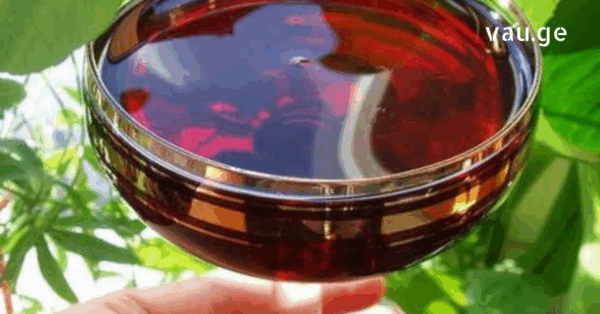
Hawthorn is traditionally considered beneficial in cases of anemia and hypovitaminosis due to its rich nutrient composition. A simple recipe includes pouring 400 ml of boiling water over two teaspoons of hawthorn berries and drinking the infusion in equal portions three to four times a day. Fresh hawthorn juice is also used as a tonic. To prepare the juice, two kilograms of fresh berries are combined with two liters of water and boiled until the fruit softens. The mixture is then strained, and the juice is pasteurized in glass jars for 15 minutes. The recommended dose is one tablespoon of fresh juice three to four times daily, taken 20–30 minutes before meals. Another effective remedy involves preparing an infusion using two tablespoons of dried berries and 200 ml of boiling water. This infusion is taken one tablespoon at a time, three to four times daily.
Hawthorn also plays a significant role in supporting women’s health, especially during menopause, when hormonal changes can cause irregular menstrual cycles. A traditional tincture can be prepared by combining 200 grams of crushed fresh berries with one liter of vodka. This mixture should be left to infuse for 12 days, after which it is strained. The recommended dosage is one teaspoon three times a day. This preparation is believed to support hormonal balance, reduce irritability, and help ease vasomotor symptoms such as hot flashes.
For weight loss, hawthorn offers additional benefits. A traditional recipe involves cooking one kilogram of ripe fruit juice with 600 grams of sugar to form a thick syrup. This syrup is taken one tablespoon three times a day. Although sweet, hawthorn syrup is believed to stimulate metabolism and aid digestion, making it a favored natural supplement in folk weight management practices. The fruit’s mild diuretic properties help reduce fluid retention, while its fiber content supports satiety and regular digestion.
Beyond its physical benefits, hawthorn has long been associated with emotional well-being. In traditional European herbal medicine, hawthorn is considered a “heart tonic”—a plant that strengthens the heart both physically and symbolically. It is believed to soothe anxiety, support circulation, and enhance vitality. Some modern herbalists use hawthorn as a gentle natural aid for stress-related palpitations, mild hypertension, or fatigue. Although scientific research is ongoing, hawthorn’s combination of antioxidants and cardiovascular-supportive compounds makes it a plant of strong therapeutic interest.
The wide range of vitamins, minerals, antioxidants, and bioactive compounds makes hawthorn one of the most valued plants in folk medicinal traditions. Its versatility allows it to be prepared in many forms—infusions, decoctions, teas, tinctures, syrups, and even fresh juice—each offering its own benefits. Whether used for general wellness, digestive support, cardiovascular health, or women’s hormonal balance, hawthorn remains a powerful natural remedy with centuries of history behind it.