













How Traditional Georgian Remedies Could Replace Western Pills
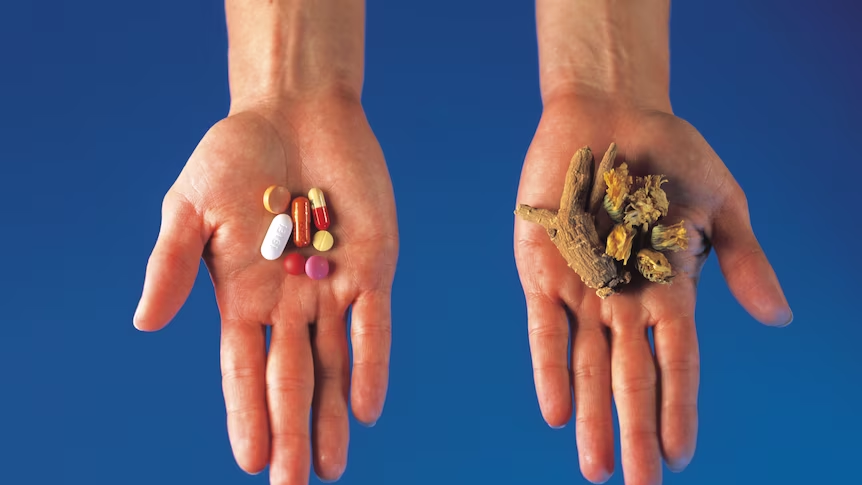
When you think of medicine, what comes to mind? A sleek white pill in a plastic bottle, a prescription with unpronounceable names, and a trip to the pharmacy. But what if the solution to many modern health problems lies not in the fluorescent aisles of a drugstore, but in the lush mountains, fertile valleys, and ancient traditions of Georgia?
For centuries, Georgian folk medicine has relied on the incredible biodiversity of the Caucasus region—a land that boasts over 4,100 species of vascular plants, many of which have therapeutic properties. These remedies have been passed down through generations, refined by experience, and rooted in the deep cultural understanding of nature.
Now, as people worldwide seek natural alternatives to synthetic drugs, the question arises: Could traditional Georgian remedies really replace Western pills?
The answer isn’t simple. While some folk remedies have strong scientific backing, others remain untested or potentially risky when misused. In this article, we’ll explore:
The history of Georgian folk medicine
The most powerful traditional remedies and their benefits
Scientific evidence behind these remedies
Where folk wisdom excels—and where caution is needed
How modern medicine could integrate these ancient practices
So, grab a cup of herbal tea (maybe mint, thyme, or chamomile—all Georgian staples), and let’s dive in.
Why Look Back to Folk Remedies Now?
Modern medicine has achieved wonders—antibiotics, vaccines, life-saving surgeries—but it’s not perfect:
Many synthetic drugs have serious side effects.
Over-prescription of antibiotics has led to resistant superbugs.
Chronic conditions like hypertension, diabetes, and anxiety often require lifelong medication, which can strain the liver and kidneys.
The wellness movement has fueled interest in plant-based, holistic healing.
Meanwhile, Georgia’s folk medicine is built on natural pharmacology. For centuries, healers and herbalists observed the healing power of plants, minerals, and even bee products, creating remedies that addressed the root causes of illness rather than just symptoms.
And unlike fad diets or miracle supplements, many Georgian remedies are now supported by modern science.
The Roots of Georgian Healing Traditions
Georgian folk medicine blends:
Ancient Iberian practices from pre-Christian times
Influences from Persian, Greek, and Roman medicine
Christian monastic traditions, where monks cultivated healing herbs in monastery gardens
Healing was holistic—addressing not just the body, but the mind and soul. Treatments combined:
Herbal infusions and decoctions
Mineral-rich clays
Aromatherapy with essential oils
Fermented foods for gut health
Bee products like propolis and royal jelly
This wasn’t “alternative medicine” for Georgians—it was the medicine.
Top Traditional Georgian Remedies (and the Pills They Could Replace)
Here are some of the most iconic Georgian remedies—and the conditions they traditionally treat—compared with their pharmaceutical counterparts.
1. Garlic (ნიორი) – The Natural Antibiotic
Folk Use:
Garlic is a staple in Georgian cuisine and medicine. Traditionally, it’s used to:
Fight colds and respiratory infections
Lower blood pressure
Improve digestion
Kill intestinal parasites
Western Pill Equivalent:
Antibiotics for mild infections
Antihypertensives
Anthelmintics (anti-parasitic drugs)
Science Says:
Modern studies confirm garlic’s:
Allicin compound has antimicrobial and antifungal properties.
Reduces LDL cholesterol and improves circulation.
Acts as a natural blood thinner, lowering stroke risk.
Caution:
Overuse can cause stomach irritation.
Interacts with blood thinners like warfarin.
2. Thyme (ახოტი) – Nature’s Cough Syrup
Folk Use:
Thyme tea is a classic Georgian remedy for:
Coughs, bronchitis, and asthma
Digestive issues
Western Pill Equivalent:
Over-the-counter cough syrups
Bronchodilators
Science Says:
Thyme contains thymol, a natural antiseptic and expectorant.
Studies show thyme extract reduces coughing frequency.
Caution:
High doses can irritate the stomach.
Not recommended for people with severe liver disease.
3. Propolis (ფუტკრის წებო) – The Bee’s Pharmacy
Folk Use:
Georgian beekeepers have long used propolis to:
Heal wounds
Soothe sore throats
Strengthen immunity
Western Pill Equivalent:
Antibiotic ointments
Immune-boosting supplements
Science Says:
Propolis has antimicrobial, antiviral, and anti-inflammatory properties.
Rich in antioxidants—great for immunity.
Caution:
Allergic reactions possible, especially in those allergic to bees.
4. Wild Rose Hips (ვარდკაჭაჭა) – Vitamin C Bomb
Folk Use:
Rose hip tea is a traditional tonic for:
Colds and flu
Fatigue
Joint pain
Western Pill Equivalent:
Vitamin C supplements
Anti-inflammatory drugs for arthritis
Science Says:
Extremely high in vitamin C (more than oranges!)
Anti-inflammatory effects help with osteoarthritis.
Caution:
May increase kidney stone risk in susceptible people.
5. Walnut Leaves and Hulls (ნიგოზის ფოთლები და ნაჭუჭი)
Folk Use:
Used in teas or tinctures to:
Control blood sugar
Heal skin wounds
Western Pill Equivalent:
Anti-diabetic drugs
Antiseptic creams
Science Says:
Research supports blood sugar-lowering properties.
Antibacterial compounds help treat minor skin infections.
6. Georgian Mineral Waters – Nature’s Digestive Aid
Borjomi, Sairme, and Nabeglavi aren’t just trendy drinks—they’re part of therapeutic traditions for:
Stomach ulcers
Liver detox
Kidney stones
Western Pill Equivalent:
Antacids
Proton pump inhibitors
Diuretics
Science Says:
These waters are rich in bicarbonates, calcium, and magnesium, aiding digestion and mineral balance.
Science vs. Tradition: Do These Remedies Really Work?
Many Georgian remedies have scientific backing:
Garlic, thyme, and propolis are well-studied worldwide.
Rose hips and walnut extracts show promising results in clinical trials.
Mineral water therapy is recognized in balneology.
However, some remedies lack rigorous studies. Just because something is traditional doesn’t make it universally safe or effective.
Advantages of Georgian Remedies Over Pills
Fewer side effects when used correctly.
Holistic benefits—often supporting multiple systems.
Lower cost compared to expensive medications.
Cultural heritage—preserves traditions and connects people to nature.
Where Western Pills Still Win
Standardized dosing ensures predictable results.
Rapid action—great for emergencies.
Rigorous testing—clinical trials confirm safety and efficacy.
Folk remedies shine for prevention and mild conditions, but for serious infections, surgeries, or advanced diseases, modern medicine is essential.
The Hidden Risks Folk Healers Don’t Always Mention
Herb-drug interactions (e.g., garlic + blood thinners = bleeding risk).
Overdose dangers—more is NOT better.
Allergic reactions to plant compounds.
Contamination in non-certified herbal products.
Can They Replace Pills Entirely?
The honest answer: Not completely. But they can:
Reduce reliance on synthetic drugs.
Support preventive health care.
Complement modern treatments in an integrative approach.
The Future: Georgian Folk Medicine Meets Modern Science
Imagine:
Clinically tested herbal capsules with standardized doses.
Functional foods based on Georgian recipes.
Medical spas using Borjomi water under doctor supervision.
Georgia has the potential to become a global hub for natural medicine research, combining ancient wisdom with modern evidence.
Practical Tips to Try Georgian Remedies Safely
Start small—don’t jump into high doses.
Inform your doctor before mixing herbs with prescriptions.
Buy quality products—look for certified, lab-tested herbs.
Watch for side effects—rash, nausea, dizziness = stop immediately.
Use for mild conditions—don’t self-treat serious illnesses.
Conclusion: A Bridge Between Past and Future
Traditional Georgian remedies aren’t just old-fashioned tricks—they represent a sophisticated natural pharmacy honed by centuries of observation. While they can’t completely replace Western pills, they offer something modern medicine often lacks: a holistic, culturally rich, and preventive approach to health.
The best path forward isn’t choosing one over the other—it’s integration. Combining the precision of modern medicine with the wisdom of Georgian tradition could give us the best of both worlds.