














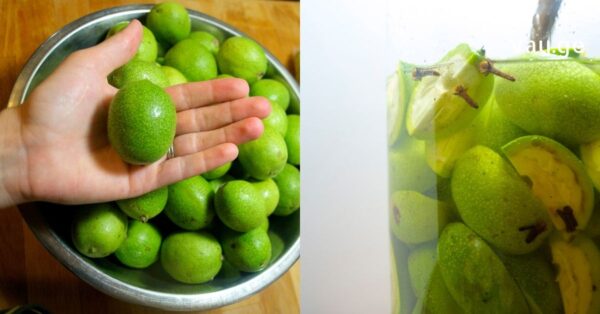
Green walnut tincture is prepared exclusively from natural ingredients — unripe green walnuts and 70% wheat alcohol. The concentration ratio is 1:10. This tincture is known for its strong effectiveness and the consistently positive results it delivers. It has been used for many years, and long-term practical experience has confirmed that its consumption can indeed be highly beneficial for overall health and well-being.
Pharmacological Properties
Green walnut, harvested at the milky-wax ripening stage, has been recognized in many cultures across the world as a potent healing remedy. Both Eastern and Western traditions have valued green walnuts since ancient times for their strengthening, immune-modulating, anti-inflammatory, antiseptic, and choleretic effects. Throughout history, it has been used as a restorative tonic that supports vitality, fortifies the body, and promotes holistic balance.
Chemical Composition
Unripe green walnuts contain salts of potassium, calcium, magnesium, and cobalt. They are extraordinarily rich in essential vitamins, including vitamins C, B1, B2, E, and PP, along with carotene and various tannins. A particularly remarkable aspect of green walnuts is their naturally high iodine content — making them a unique and easily absorbable natural source of organic iodine.
In terms of vitamin C concentration, green walnuts far surpass many commonly known sources: they contain eight times more vitamin C than black currants and fifty times more vitamin C than citrus fruits. This immense nutrient density explains why green walnut tincture has such broad therapeutic potential.
Key Properties of Green Walnut
Green walnut tincture possesses a wide range of powerful healing qualities:
A unique immunomodulatory and tonic agent that supports overall vitality.
Demonstrates excellent blood-purifying, antiseptic, choleretic, wound-healing, and anti-inflammatory effects.
Promotes hormonal balance and supports proper endocrine function.
A highly effective natural remedy for atherosclerosis.
Helps reduce and normalize high cholesterol levels.
Supports healthy digestion and improves gastrointestinal function.
Stimulates the production of protective factors that strengthen joints and skin.
Enhances resistance to harmful radiation exposure.
Stimulates spermatogenesis and supports reproductive health.
Exhibits significant anti-tumor and resorptive (absorption-enhancing) properties.
Because of these qualities, green walnut tincture is often associated with helping the body fight against various forms of oncological diseases. While it is not a substitute for medical treatment, its supportive and restorative action is widely acknowledged.
The alcoholic tincture is considered the most effective medicinal form of green walnut, as alcohol extracts the maximum amount of active compounds, enhancing absorption and potency.
Conditions for Which Green Walnut Tincture Is Commonly Used
Green walnut tincture is traditionally used to support the body in many different health conditions, including:
Hypothyroidism and iodine deficiency, due to its rich natural iodine content.
Avitaminosis, chronic fatigue, and anemia, thanks to its high vitamin and mineral levels.
Mastopathy and fibroadenoma of the breast, where its resorptive properties are beneficial.
Rheumatism, polyarthritis, arthrosis, and osteochondrosis, as it supports joint health and reduces inflammation.
Skin disorders such as diathesis, neurodermatitis, dermatitis, eczema, psoriasis, lupus, and fungal skin infections.
Inflammatory conditions of the gastrointestinal tract, including gastritis and colitis.
Blood purification, especially after radiation exposure or heavy toxin accumulation.
Adnexitis and uterine fibroids, where its balancing and anti-inflammatory effects are valuable.
Male and female infertility, with its ability to balance hormones and stimulate reproductive function.
Glomerulonephritis and various kidney-related conditions.
Atherosclerosis, hypertension, and hypercholesterolemia, as it supports vascular health.
Thrombophlebitis, improving circulation and reducing inflammation.
Diseases of the blood and lymphatic systems, including supportive use in leukemia.
Type 2 diabetes, where it may help stabilize metabolic processes.
Nervousness, irritability, and heightened stress levels.
Parasitic infestations, as it is traditionally used as a natural antiparasitic agent.
Because of its wide spectrum of benefits, green walnut tincture is often considered one of the most powerful natural restoratives available.
Additional Notes and Traditional Uses
Beyond the conditions listed above, practitioners of herbal medicine note that green walnut tincture:
Supports liver function and promotes detoxification.
Helps regulate the menstrual cycle.
Strengthens hair and improves skin texture due to high antioxidant content.
Can be used externally for wound cleansing and faster healing.
Enhances nutrient absorption by strengthening digestive organs.
Supports immune response during seasonal illnesses.
Helps with chronic inflammatory conditions that do not respond well to conventional therapy.
Its strong antioxidant profile also contributes to slowing cellular aging, protecting DNA, and supporting long-term wellness.
Important Reminder
Although green walnut tincture is widely used in traditional and folk medicine, it should not replace professional medical treatment — especially for serious or chronic diseases. Individuals who are pregnant, breastfeeding, or have chronic conditions should consult a healthcare professional before using it. Those with allergies to nuts should avoid it completely.








































