












Linden (genus Tilia) is a well-known and highly valued medicinal tree that has been used in traditional herbal medicine for centuries. There are up to 40 different species of linden worldwide. It is a tall and impressive tree, often reaching up to 30 meters in height. Linden belongs to the Malvaceae family (formerly classified under Tiliaceae). It has a straight trunk, a wide and richly branched crown, and bark that becomes longitudinally grooved with age. Young branches are typically grayish-red and covered with small wart-like structures.
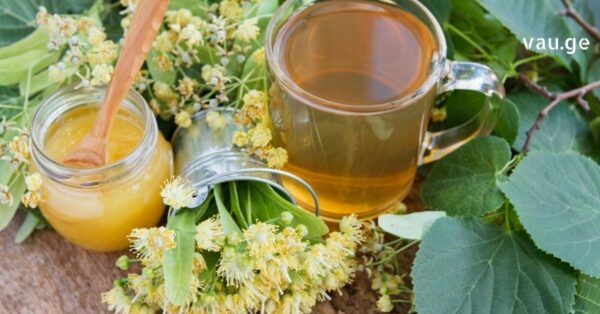
The leaves of the linden tree are arranged alternately along the branches. They are long-stemmed, serrated along the edges, and heart-shaped. The upper side of the leaf is green and smooth, while the underside is lighter, sometimes grayish, and may be slightly hairy. The leaves are usually 5–9 cm long and 5–8 cm wide.
However, the most valuable part of the linden tree for medicinal purposes is its flowers. The flowers are small, pale yellow, fragrant, and grow in clusters attached to a light green bract (a leaf-like structure). These blossoms are not only beautiful but also rich in biologically active compounds.
Harvesting and Preparing Linden Flowers
Linden flowers are collected as raw medicinal material, usually together with their bracts. The best time for harvesting is when more than half of the flowers have fully opened. This ensures maximum concentration of beneficial substances.
Harvesting should only be done in dry weather, preferably during the daytime, when there is no dew on the flowers. Moisture can reduce quality and promote spoilage. Since linden blooms for only 10–15 days, it is important not to delay the collection process.
Once gathered, the flowers should be dried in a thin layer in a shaded, well-ventilated area, or in dryers at a temperature of 25–30°C (77–86°F). Overdrying must be avoided, as it may cause the flowers to crumble and lose potency. Properly dried linden flowers can be stored for up to two years in a dry, dark place.
Chemical Composition and Active Compounds
Linden flowers contain a wide range of beneficial compounds, including:
Essential oils
Hesperidin
Tiliacin
Saponins
Tannins
Carotene
Ascorbic acid (Vitamin C)
One of the important components of its essential oil is farnesol, a compound known for its soothing and antimicrobial properties.
These substances give linden its anti-inflammatory, calming, and immune-supporting qualities.
Traditional Uses in Folk Medicine
In traditional medicine, linden flowers are commonly used in the form of teas, infusions, and decoctions. They are valued for their:
Diaphoretic (sweat-inducing) effect
Mild pain-relieving properties
Calming and sedative action
Linden tea is especially popular during colds and flu. By promoting sweating, it helps reduce fever and eliminate toxins from the body. Its soothing effect also helps relax the nervous system and support restful sleep.
Linden infusions are also traditionally used for:
Nervous excitability
Convulsions
Insomnia
Kidney disorders
Liver support
Hypertension (high blood pressure)
Respiratory Health Benefits
Linden flower tea is highly effective during colds and upper respiratory infections. It is often recommended for acute bronchitis, sore throat, and inflammation of the upper airways.
The decoction can also be used as a gargle for inflammatory processes in the mouth and throat, including tonsillitis and angina. Linden flowers are often included in herbal throat-rinse blends because of their soothing and antimicrobial properties.
External Applications
Folk medicine also uses mucilaginous decoctions made from linden leaves, bark, and crushed buds. These preparations are applied externally as warm or moist compresses.
Such compresses are traditionally used for:
Burns
Ulcers
Breast inflammation (mastitis)
Hemorrhoids
Rheumatism
Gout
The anti-inflammatory and soothing nature of linden makes it useful in reducing pain and swelling when applied externally.
How to Prepare Linden Tea
For colds and flu:
Take 2 tablespoons of dried linden flowers and pour 2 cups of boiling water over them. Let the mixture steep for 20 minutes. Strain and drink warm.
Alternatively, take 1–2 tablespoons of crushed flowers, pour 2 cups of boiling water over them, boil for 10 minutes, strain, and drink 2–3 cups in the evening.
For kidney, liver, and hypertension support:
Drink ½ cup of linden tea three times daily.
Immune-Boosting Herbal Tea Blend
An especially powerful herbal combination includes linden flowers along with nettle, celery, ginger, and garlic.
Ingredients:
2 teaspoons linden flowers
1 teaspoon nettle
A small amount of fresh green celery
20 grams ginger root
2 cloves garlic
Place all ingredients in a thermos. Grate or finely chop the ginger. Garlic can be crushed or sliced; however, if preferred, it may be omitted. Pour hot water over the mixture and allow it to infuse for at least one full day.
This herbal tea is believed to help remove harmful salts from the body, reduce cholesterol levels, and strengthen the immune system. Supporters claim it benefits blood vessels, the heart, and the lungs, helping the body function more efficiently.
Additional Health Benefits
Beyond its traditional uses, linden is often associated with gentle detoxification. Its diuretic and diaphoretic properties may assist the body in eliminating excess fluids and metabolic waste. Because it is mild and generally well tolerated, linden is often recommended for children and elderly individuals during mild illnesses (under professional supervision).
Linden’s calming effect on the nervous system makes it particularly useful during stressful periods. A warm cup of linden tea in the evening can promote relaxation and improve sleep quality.
Its antioxidant content may also contribute to protecting cells from oxidative stress, which plays a role in aging and many chronic diseases.
Safety and Precautions
Although linden is generally considered safe, it is important to consult a healthcare professional before starting any herbal treatment, especially if you have chronic health conditions or are taking medication.
Excessive consumption may not be advisable for people with certain heart conditions, and pregnant or breastfeeding women should seek medical advice before use.
Final Thoughts
Linden is more than just a beautiful flowering tree—it is a remarkable medicinal plant with centuries of traditional use. From soothing colds and calming nerves to supporting immunity and improving overall well-being, linden offers a wide range of potential benefits.
When properly harvested, prepared, and used responsibly, linden can become a valuable part of a natural health routine. Its gentle yet effective properties remind us that some of the most powerful remedies can come directly from nature.
However, herbal medicine should complement—not replace—professional medical care. Combining traditional wisdom with modern medical guidance ensures the safest and most effective approach to health.








































